
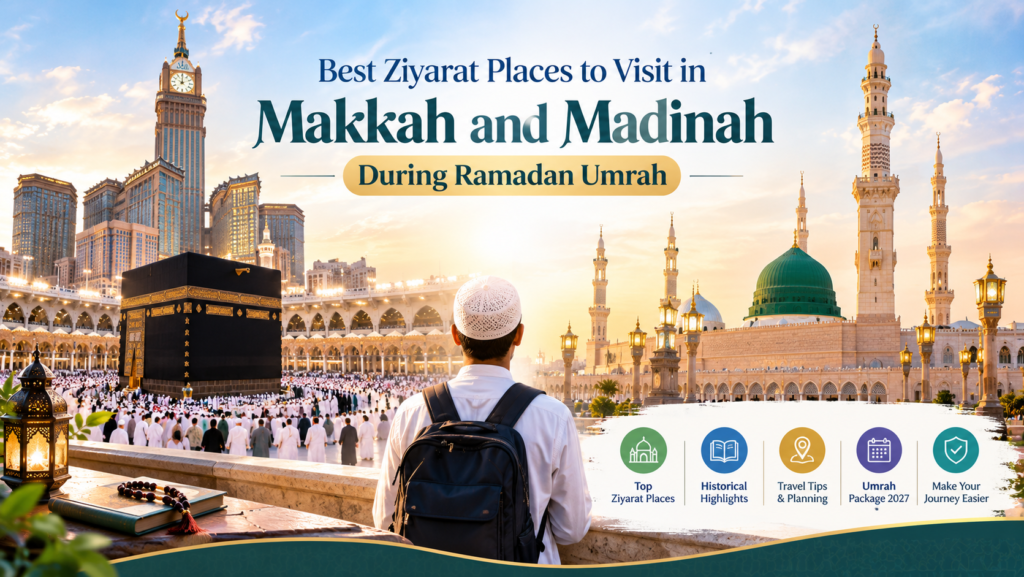
Ramadan is a special time for Muslims to strengthen their faith, increase their worship, and reflect on Islamic history. For pilgrims performing Umrah during this blessed month, visiting important Islamic and historical sites in Makkah and Madinah can add an educational and meaningful dimension to the journey. From the mountains associated with the early days of Islam to the historic mosques of Madinah, these places help visitors understand the events that shaped the Muslim community.
If you are planning your pilgrimage from the UK, booking your Ramadan Umrah tickets in advance can help you organise your travel dates, accommodation, and sightseeing plans more comfortably. Once your flights and hotels are confirmed, you can create a practical Ziyarat itinerary that leaves enough time for Salah, Quran recitation, fasting, and rest. Since Ramadan can be particularly busy, planning your visits ahead of time can also help you manage transport and avoid unnecessary journeys.
Why Visit Ziyarat Places During Ramadan Umrah?
Ziyarat visits allow pilgrims to learn about the history of Islam and the lives of Prophet Muhammad (peace be upon him) and his companions. Makkah is closely connected with the beginning of the Prophet’s mission, while Madinah played a central role in the development of the early Muslim community.
These visits are generally separate from the essential rituals of Umrah. They are optional activities that pilgrims can include in their travel plans according to their interests, health, and available time.
During Ramadan, it is especially important to balance sightseeing with worship. You do not need to visit every historical location to have a meaningful journey. Choosing a few significant places and learning about their history beforehand can make your experience more rewarding.
Best Ziyarat Places to Visit in Makkah
Makkah has several locations associated with important events in Islamic history. You can explore some of these places through an organised Ziyarat tour or by arranging suitable local transport.
1. Masjid al-Haram and the Holy Kaaba
Masjid al-Haram is the most important destination for Muslims visiting Makkah. It surrounds the Holy Kaaba, towards which Muslims around the world turn during their daily prayers. It is also the central location for performing Tawaf during Umrah.
During Ramadan, many pilgrims spend additional time at the mosque praying, reading the Quran, making dua, and attending congregational prayers. The atmosphere can be particularly busy in the evenings, around iftar, and during Taraweeh.
Rather than treating Masjid al-Haram as just another sightseeing stop, make it the main focus of your time in Makkah. Allow enough time for worship and follow the instructions of mosque staff, particularly when moving through crowded areas.
2. Jabal al-Noor and the Cave of Hira
Jabal al-Noor, also known as the Mountain of Light, is associated with the Cave of Hira, where Prophet Muhammad (peace be upon him) received the first revelation of the Quran.
The site holds historical significance for Muslims because of its connection with the beginning of the Prophet’s mission. Visitors often want to learn about the circumstances surrounding the first revelation and reflect on its importance.
However, reaching the cave requires a steep and physically demanding climb. It may not be suitable for everyone, especially older pilgrims, people with mobility difficulties, or those feeling tired while fasting. You can appreciate the historical significance of the location without climbing the mountain.
If you plan to visit, check current access information and weather conditions. Avoid attempting the climb during the hottest part of the day or when you are not physically prepared.
3. Jabal Thawr
Jabal Thawr is associated with the migration of Prophet Muhammad (peace be upon him) from Makkah to Madinah. According to Islamic tradition, the Prophet and Abu Bakr (may Allah be pleased with him) took shelter in the Cave of Thawr during their journey.
The site is important for understanding the Hijrah, which marked a major turning point in Islamic history. The migration helped establish the Muslim community in Madinah and is connected with the beginning of the Islamic calendar.
Like Jabal al-Noor, Jabal Thawr involves a challenging climb. During Ramadan, consider your energy levels and physical ability before including it in your itinerary. Visiting the surrounding area or learning about the Hijrah may be a more comfortable option for some pilgrims.
4. Mina, Arafat, and Muzdalifah
Mina, Arafat, and Muzdalifah are important locations associated with the Hajj pilgrimage. Each place has a specific role in the Hajj rituals, and learning about them can help pilgrims better understand the wider Islamic pilgrimage tradition.
- Mina: The area where pilgrims stay during particular days of Hajj and perform important rites.
- Arafat: The location associated with the central standing ritual of Hajj.
- Muzdalifah: The area where pilgrims stay after leaving Arafat during Hajj and carry out specific rites.
Although these places are connected primarily with Hajj, some visitors include them in historical tours around Makkah. Remember that access, transport arrangements, and permitted activities can vary, so confirm local guidance before visiting.
5. Masjid al-Taneem
Masjid al-Taneem, also known as Masjid Aishah, is a well-known mosque outside the boundary of the Haram in Makkah. It is associated with the place where Aishah (may Allah be pleased with her) entered into Ihram for Umrah following an instruction from the Prophet (peace be upon him).
The mosque is relevant for pilgrims who need to enter Ihram for another Umrah according to their circumstances and applicable guidance. However, visiting the mosque is not a required part of every Umrah journey, and performing additional Umrah is a separate religious matter from general Ziyarat.
If you are considering another Umrah, seek reliable Islamic guidance about the correct procedure for your situation rather than assuming that every pilgrim needs to visit Masjid al-Taneem.
Best Ziyarat Places to Visit in Madinah
Madinah is deeply connected with the life of Prophet Muhammad (peace be upon him), the Hijrah, and the development of the early Muslim community. Many pilgrims visit the city after completing Umrah in Makkah.
6. Al-Masjid an-Nabawi — The Prophet’s Mosque
The Prophet’s Mosque is one of the most significant places in Islam. It was established by Prophet Muhammad (peace be upon him) after his arrival in Madinah and remains the centre of worship for visitors to the city.
During Ramadan, pilgrims spend time praying, reciting the Quran, and sending blessings upon the Prophet (peace be upon him). Many visitors also hope to offer their greetings at the Prophet’s resting place, following the established etiquette and local instructions.
The mosque and surrounding area can become very busy, especially in the evenings and during the final ten nights of Ramadan. Plan your visits around prayer times, allow additional time to move through crowds, and follow official instructions regarding access to designated areas.
7. Masjid Quba
Masjid Quba is recognised as the first mosque established in Islam. It is located in Madinah and is associated with the arrival of Prophet Muhammad (peace be upon him) after the Hijrah from Makkah.
The mosque has considerable historical and religious significance. Many pilgrims include it in their Madinah Ziyarat itinerary to learn about the early Muslim community and the Prophet’s connection with the area.
You can visit Masjid Quba as part of an organised tour or arrange transport independently. Check the current visitor arrangements before travelling, and allow enough time for prayer without rushing to your next destination.
8. Mount Uhud and the Site of the Battle of Uhud
Mount Uhud is associated with the Battle of Uhud, an important event in early Islamic history. The battle took place near Madinah and involved Prophet Muhammad (peace be upon him) and his companions.
Visiting the area can help pilgrims understand the sacrifices made by the early Muslims and reflect on the lessons of patience, discipline, and perseverance connected with the event.
The surrounding area is a common stop on Madinah Ziyarat tours. Visitors should remain respectful, follow local instructions, and avoid climbing or entering restricted areas. If you are fasting or travelling with elderly family members, choose a tour that allows enough time to rest.
9. Masjid al-Qiblatayn
Masjid al-Qiblatayn, or the Mosque of the Two Qiblas, is associated with the change in the direction of prayer from Jerusalem towards the Kaaba in Makkah.
The mosque is an important historical location because it connects visitors with a significant event in the early Muslim community. A visit can provide an opportunity to learn about the history of the Qibla and its importance in Islamic worship.
You can include Masjid al-Qiblatayn in a wider tour of Madinah’s historical mosques. Before travelling, confirm the current access arrangements and plan your route to avoid unnecessary journeys between distant locations.
10. The Uhud Martyrs’ Cemetery
The Uhud Martyrs’ Cemetery is associated with those who died during the Battle of Uhud, including Hamza ibn Abdul-Muttalib (may Allah be pleased with him), the uncle of Prophet Muhammad (peace be upon him).
The area is significant for remembering the sacrifices of the early Muslims and reflecting on the lessons of Islamic history. Visitors should approach the site respectfully and follow the appropriate etiquette when offering greetings or making dua.
As with other historical locations, follow the instructions of local authorities and avoid disrupting others who have come to pay their respects.
How to Plan Your Ziyarat During Ramadan
A good Ziyarat itinerary should allow you to explore important sites without making your Ramadan Umrah journey exhausting. Start by listing the places you most want to visit, then group nearby locations together to reduce travel time.
For example, you can dedicate one part of your stay to selected historical sites in Makkah and another to the mosques and landmarks of Madinah. You do not need to visit every location in a single day. A shorter tour with enough time to rest is often more comfortable, especially when fasting.
When planning your Ziyarat visits during Ramadan, choosing the right Umrah Package 2027 can make your journey more convenient. Check whether the package includes guided Ziyarat tours, transport to historical sites, and transfers between Makkah and Madinah. Some packages cover selected visits, while others charge extra for sightseeing. Always confirm the inclusions before booking so you can plan your itinerary and budget with confidence.
Best Time to Visit Ziyarat Places During Ramadan
The best time to visit depends on the location, weather, transport arrangements, and your personal routine. Morning visits may be suitable for some pilgrims, while others may prefer cooler periods later in the day. However, it is important not to let sightseeing interfere with your prayers, fasting, or necessary rest.
Avoid strenuous mountain climbs when you are exhausted or dehydrated. If you are travelling with children, elderly relatives, or people with mobility difficulties, choose locations with easier access and allow extra time between stops.
Ramadan can bring increased visitor numbers to both holy cities, particularly around iftar and evening prayers. Check current access guidance and leave flexibility in your schedule in case traffic or crowds cause delays.
Practical Tips for a Comfortable Ziyarat Experience
Keep these points in mind when organising your visits:
- Wear comfortable footwear: Some locations require considerable walking, so choose suitable shoes for the journey.
- Carry essential items: Keep your phone, hotel address, identification, and necessary personal items with you.
- Stay hydrated outside fasting hours: Drink sufficient water between iftar and suhoor, particularly if you have a busy itinerary.
- Use reliable transport: Confirm pickup points, prices, and journey times before setting off.
- Respect religious etiquette: Follow local rules and avoid disturbing people who are praying or offering their greetings.
- Check accessibility: Some sites involve steep paths, uneven ground, or long walks.
- Keep your schedule flexible: Leave enough time for Salah, meals, rest, and unexpected delays.
Most importantly, remember that Ziyarat is an opportunity to learn about Islamic history. You do not have to rush through every location to make your pilgrimage meaningful.
Conclusion
The best Ziyarat places to visit during Ramadan Umrah include significant sites in both Makkah and Madinah. From the Cave of Hira and Jabal Thawr to Masjid Quba, Mount Uhud, and the Prophet’s Mosque, each location offers an opportunity to learn about important events in Islamic history. By choosing suitable places, arranging reliable transport, and planning around prayer times, you can make your journey more comfortable and rewarding.
Before finalising your travel plans, you can explore the services offered by Makkah Travel and ask about available accommodation, transport, and Ziyarat arrangements. Confirm which visits are included, whether guided tours are available, and what additional costs may apply so that your itinerary matches your needs.
With thoughtful preparation, you can explore these historical locations while keeping worship, reflection, and rest at the heart of your Ramadan Umrah journey.