
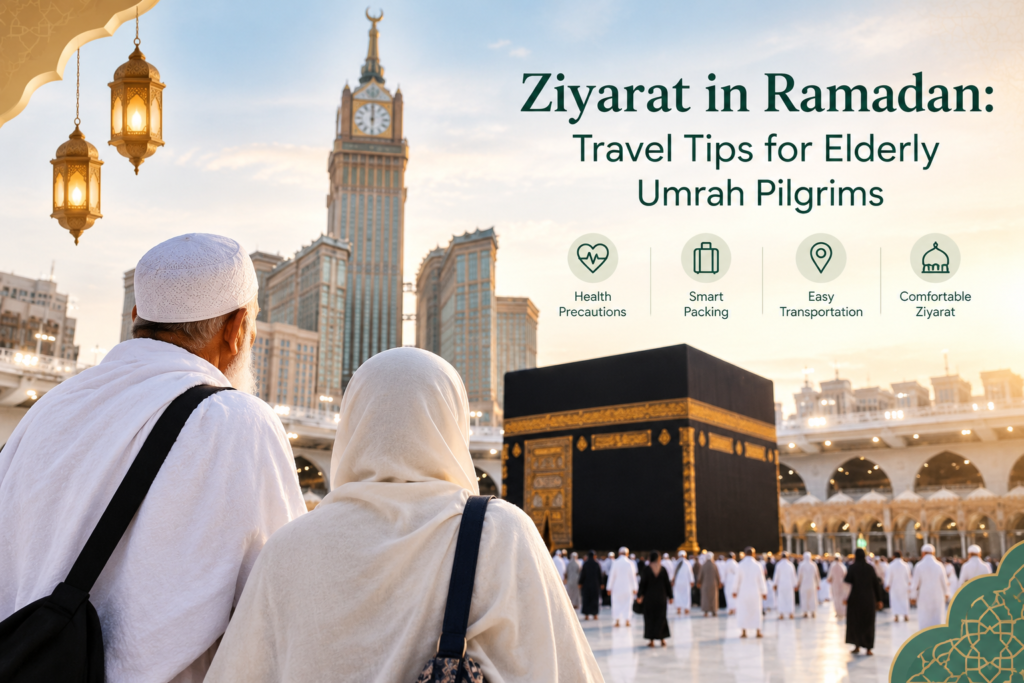
Performing Umrah during Ramadan is a meaningful experience for Muslims who wish to spend time in worship and visit the holy cities of Makkah and Madinah. For elderly pilgrims, however, travelling during this busy month requires extra planning. Long walking distances, crowded prayer areas, fasting, and changes in daily routines can make the journey physically demanding. With the right preparation, older travellers can enjoy Ziyarat visits while protecting their comfort, safety, and energy.
If you are travelling with elderly parents or relatives, booking your Ramadan Umrah tickets early gives you more time to organise flights, accommodation, transport, and suitable travel arrangements. It is also helpful to plan Ziyarat visits around their mobility, medical needs, and preferred worship routine rather than trying to visit every historical site in a short period.
1. Understand the Needs of Elderly Pilgrims
Before planning Ziyarat, consider the individual needs of the older person travelling with you. Some elderly pilgrims can walk comfortably for long periods, while others may need a wheelchair, regular breaks, or assistance when moving through crowded areas.
Discuss the journey with them before booking. Consider how far they can walk, whether they can manage stairs, and how they usually cope with heat and physical activity. If they have a medical condition or take regular medication, they should consult their healthcare professional before travelling to discuss fitness for the journey and any necessary precautions.
A comfortable itinerary should allow time for rest, meals, prayers, and unexpected delays. Rather than planning a full day of sightseeing, choose a few meaningful locations and visit them at a manageable pace.
2. Choose Ziyarat Places Carefully
Makkah and Madinah have several important Islamic and historical locations that pilgrims may wish to visit. However, not every place is equally suitable for elderly visitors, especially if it involves steep paths, long walks, or exposure to the sun.
In Makkah, possible places of interest include:
- Jabal al-Noor: Associated with the Cave of Hira and the first Quranic revelation. Reaching the cave involves a demanding uphill climb, so it may not be suitable for elderly pilgrims with limited mobility.
- Jabal Thawr: Known for its connection with the Prophet’s migration to Madinah. The mountainous terrain makes climbing unsuitable for many older visitors.
- Mina and Arafat: Important locations in the Hajj pilgrimage that some visitors explore as part of a guided historical tour.
In Madinah, elderly pilgrims may prefer visits to accessible locations such as Masjid Quba, Mount Uhud, and other historical sites, depending on their mobility and current access arrangements.
Remember that visiting these locations is not a requirement for completing Umrah. If a site involves difficult terrain or excessive physical effort, it is perfectly reasonable to skip it and prioritise comfort and worship.
3. Plan Visits During Less Demanding Hours
Ramadan brings changes to daily routines in Makkah and Madinah. Many pilgrims spend additional time praying, reciting the Quran, and attending Taraweeh, while crowds can increase around iftar and the evening prayers.
For elderly visitors, it is best to arrange Ziyarat when they feel rested and when transport and site access are convenient. A morning visit may suit some travellers, while others may prefer a shorter outing later in the day. The right schedule depends on personal energy levels, weather, prayer times, and local arrangements.
Avoid planning a long sightseeing tour immediately after a tiring flight or a late night of worship. If the older traveller is fasting, consider how the timing of the visit may affect their energy and hydration. Anyone who feels unwell should stop, rest, and seek medical assistance when needed.
4. Arrange Accessible Transport in Advance
Transport can make a significant difference to the comfort of elderly Umrah pilgrims. Walking between hotels, transport points, and Ziyarat locations may be tiring, particularly when the streets are busy.
Consider the following options:
- Private transport: Can reduce walking between locations and allow more flexibility with breaks.
- Organised Ziyarat tours: May simplify planning by arranging a driver, route, and pickup point.
- Wheelchairs or mobility carts: Can help eligible travellers who have difficulty walking longer distances.
- Hotel shuttle services: May reduce the need to walk long distances, although availability and operating hours should be confirmed.
Ask the transport provider whether the vehicle is suitable for the traveller’s mobility needs and whether assistance is available when getting in and out. Do not assume that every tour includes wheelchair access or door-to-door service.
Official services at the Two Holy Mosques include mobility support for elderly pilgrims and people with disabilities. The available options and booking arrangements can vary, so check the current official guidance before your visit.
5. Select a Convenient Hotel Near the Holy Mosques
Choosing the right hotel is particularly important when travelling with elderly relatives. A property that reduces walking and makes it easier to return for rest can improve the overall experience.
When comparing hotels, consider:
- Distance from the mosque entrance you are likely to use
- Step-free access and lift availability
- Wheelchair accessibility and room layout
- Availability of seating and accessible bathrooms
- Meal options for suhoor and iftar
- Transport services and the ease of reaching the hotel
Do not rely solely on a hotel’s advertised distance from the Haram. Crowds, pedestrian routes, entrances, and road layouts can affect the actual journey. Check the location on a map and read recent guest reviews, especially comments from older visitors or people using mobility aids.
If possible, request a room near the lift and confirm any accessibility requirements directly with the hotel before paying.
6. Prepare a Practical Daily Itinerary
A simple itinerary helps elderly pilgrims enjoy Ziyarat without feeling rushed. Instead of scheduling multiple locations in one day, choose a small number of nearby places and allow enough time for travel and rest.
For example, you could organise your day as follows:
- Morning: Visit one or two accessible historical sites when the traveller feels rested.
- Midday: Return to the hotel for rest, prayer, and personal needs.
- Afternoon or evening: Keep the schedule flexible around iftar and prayer times.
- Night: Attend prayers if the traveller feels comfortable, or rest at the hotel.
If you are comparing an Umrah Packages 2027, check whether Ziyarat tours, hotel transfers, and suitable transport are included. Ask the provider about walking distances, tour duration, pickup arrangements, and whether the itinerary can be adjusted for elderly passengers. A package that offers flexibility may be more suitable than one with a tightly scheduled sightseeing programme.
7. Take Care of Meals and Hydration During Ramadan
Fasting and physical activity can be challenging for older travellers, particularly when temperatures are high or the schedule includes long periods away from the hotel. Planning meals and rest periods can help make the journey more manageable.
During non-fasting hours, drink water regularly unless a healthcare professional has advised a fluid restriction. Choose balanced meals at suhoor and iftar, and avoid relying entirely on heavy meals that may leave the traveller feeling uncomfortable.
Carry water when permitted and practical, along with any personal items needed during outings. If an elderly pilgrim experiences dizziness, confusion, unusual weakness, chest pain, or difficulty breathing, stop the activity and seek appropriate medical help promptly.
Older people with medical conditions should discuss fasting and travel with their healthcare professional before the trip. Islamic exemptions relating to fasting can depend on individual circumstances, so anyone with concerns should seek guidance from a trusted qualified scholar as well as medical advice.
8. Keep Medication and Medical Information Accessible
Elderly pilgrims should prepare their medication well before departure. Keep prescribed medicines in their original packaging and carry enough for the journey, with some additional allowance for unexpected delays where appropriate.
It is helpful to keep a written list of medications, allergies, medical conditions, and emergency contacts. Carry essential medicines in hand luggage rather than placing everything in checked baggage. Check current Saudi entry requirements for any medication that may be restricted.
Before travelling, confirm that suitable travel insurance is in place and understand how to access medical care in Saudi Arabia. If the traveller uses a walking aid, hearing aid, glasses, or other essential equipment, check that it is in good condition and pack any necessary accessories.
9. Stay Safe in Crowded Areas
Crowds can become particularly heavy around the holy mosques during Ramadan, especially before and after major prayer times. Elderly pilgrims should avoid rushing through busy walkways and should follow official signs and instructions.
Use designated routes and accessible entrances where available. Agree on a meeting point with family members in case anyone becomes separated, and keep the hotel’s address and contact number readily available. A charged mobile phone can also make communication easier.
If the traveller uses a wheelchair, check the designated routes and available assistance before entering crowded areas. Allow extra time to move between locations, and never feel pressured to keep pace with a larger group if doing so becomes uncomfortable.
In Madinah, visitor support services at the Prophet’s Mosque have included guidance, assistance with mobility services, and help for elderly visitors. Check current official arrangements when planning your visit because service locations and availability may change.
10. Travel with a Companion Who Can Provide Support
Whenever possible, elderly pilgrims who need assistance should travel with a trusted family member or companion. This person can help with directions, transport, medication schedules, hotel arrangements, and communication with tour staff.
Before each outing, agree on the destination, expected return time, and the amount of walking involved. Carry identification and emergency contact details, and ensure the companion understands the older traveller’s needs.
If you are arranging the trip through a travel agency, explain any mobility or health-related requirements before confirming the booking. Bismillah Travel is one provider you can contact to ask about available Umrah arrangements and whether suitable accommodation, transfers, or Ziyarat options can be arranged for elderly travellers. Confirm the services and accessibility arrangements directly before booking.
Conclusion
Ziyarat during Ramadan can be a rewarding part of an Umrah journey for elderly pilgrims when it is planned with care. Choosing accessible locations, arranging reliable transport, selecting a convenient hotel, and allowing enough time for rest can help make visits more comfortable. Most importantly, adapt the itinerary to the traveller’s health and mobility rather than trying to visit every historical site.
With thoughtful preparation and flexible arrangements, elderly pilgrims can enjoy their time in Makkah and Madinah while focusing on worship and spiritual reflection. Check current official guidance, discuss health concerns with a healthcare professional, and confirm all travel services before departure.